The $100 Billion Opportunity: How Wedding Businesses Can Win in 2025 and Beyond

VowSocial Team
3/10/2026
The $100 Billion Opportunity: How Wedding Businesses Can Win in 2025 and Beyond
The numbers are in — and they're extraordinary.
According to The Knot Worldwide's 2026 Real Weddings Study, the U.S. wedding industry has crossed the $100 billion threshold. With roughly 2 million couples getting married in the U.S. each year and an average spend of $34,000 per wedding, the market isn't just surviving — it's thriving with remarkable consistency, even amid broader economic uncertainty.
But here's the catch: being in a booming industry doesn't automatically mean your business is booming. The wedding market is more competitive, more digitally driven, and more discerning than ever before. The businesses that are winning aren't necessarily the biggest — they're the ones that understand where couples are looking and what actually converts them into clients.
This is your data-backed roadmap.
The State of the Industry: What the Numbers Tell Us
Before diving into tactics, it helps to understand the landscape you're operating in.
Key Stat
The U.S. wedding services market was valued at $62.74 billion in 2024 and is projected to reach $105.79 billion by 2033, growing at a CAGR of nearly 6% per year.
— ResearchAndMarkets.com
Globally, the picture is even larger. The global wedding industry is now valued at approximately $1.3 trillion annually, with China alone accounting for around $500 billion of that figure.
For wedding businesses in the U.S., the median wedding spend currently sits at $18,231 — meaning half of all couples are spending below that amount. This matters because it tells you something important: while the average gets pulled up by high-spend events, the typical couple is more budget-conscious. Businesses that package their services thoughtfully for the mid-market — without sacrificing perceived value — have a significant growth opportunity.
The industry also weathered real headwinds in 2023 and 2024. Venue owners surveyed in recent forecasts noted lower guest counts and tighter budgets as dominant concerns. But the data from 2025 weddings tells a more optimistic story: spending held firm, guest counts stabilized around 117 per wedding, and couples continued to hire an average of 13 wedding professionals for their big day.
The market is resilient. The question is whether your marketing is.
The Great Digital Shift: Where Couples Are Finding Their Vendors
If there is one defining trend reshaping the wedding industry, it's this: couples are not finding vendors the way they used to. The path from inspiration to booking is now almost entirely digital — and understanding that path is the single most important thing a wedding business can do.
Google Is Still King — But It's Evolving
In survey data from wedding professionals, Google Search remains the #1 lead source, with 64% of vendors citing it as a top channel for inquiries. Even among ultra-luxury couples with no budget ceiling, 78% reported finding their vendors through a Google search.
That means SEO is not optional. It is foundational.
But "SEO" in 2025 looks different from what it used to. AI-powered search features now synthesize answers rather than just listing links. Wedding businesses that publish helpful, specific content — venue guides, planning timelines, vendor comparison articles — are earning visibility not just in organic results, but inside AI-generated summaries that appear before the first link.
If you're not investing in content marketing, you're increasingly invisible.
Instagram: The Discovery Engine for Wedding Couples
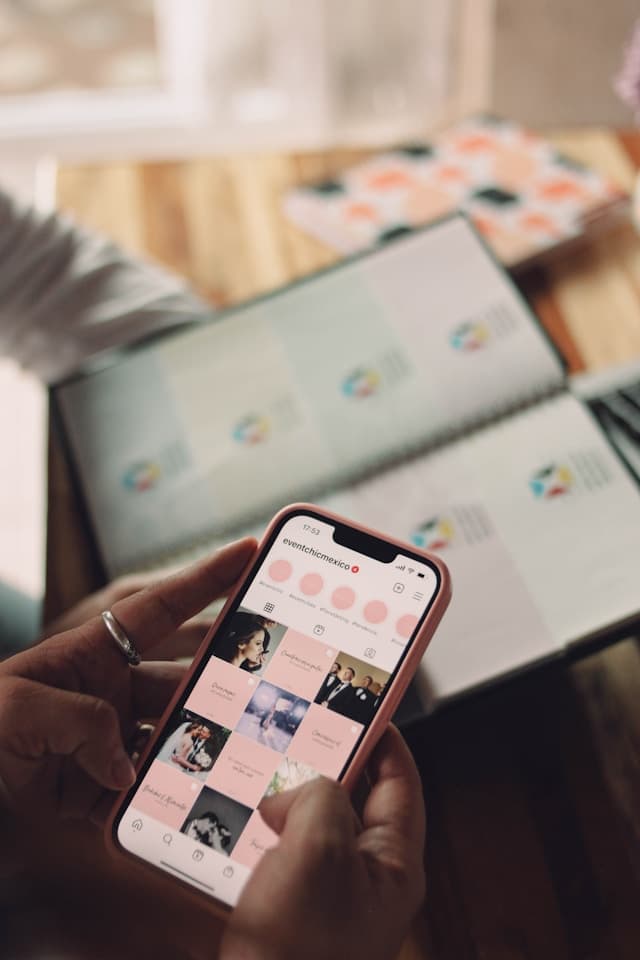
Instagram sits just behind Google and referrals as a top lead source for wedding vendors. The platform has proven uniquely suited to the wedding industry for one simple reason: weddings are inherently visual, and Instagram rewards beautiful, emotionally resonant content.
The data reinforces this. 57% of couples discover their wedding photographers specifically via Instagram. The platform's monthly follower growth rate for wedding brands averages 2.3% — more than three times the cross-industry average of 0.6%.
What works on Instagram in 2025 isn't the perfectly curated flatlay from 2019. Today's highest-performing content mixes polished portfolio shots with authentic, behind-the-scenes moments: a florist unwrapping blooms at 5 AM, a venue being transformed in real time, an unscripted reaction during a first look. These human moments drive saves, shares, and the kind of emotional resonance that translates into inquiry forms being filled out.
Reels with video content also consistently outperform static posts — and not by a small margin. Video content generates engagement rates significantly higher than static images for wedding vendors. If your business isn't publishing short-form video regularly, you're leaving reach — and bookings — on the table.
The TikTok Reality Check
Here's a statistic that might surprise you: despite enormous cultural pressure to "go viral on TikTok," only 4% of wedding professionals report receiving actual leads from TikTok — making it the lowest-performing lead source in the industry, behind even ChatGPT.
That doesn't mean TikTok has no value. It can be a powerful brand awareness and inspiration channel, particularly given that 50% of couples now get wedding inspiration from TikTok and 60% of Gen Z couples specifically cite it as an inspiration source.
The nuance is this: TikTok builds awareness and brand affinity. It rarely converts directly into bookings. If your goal is leads, your time is better spent on Google, Instagram, and referral cultivation. If you enjoy TikTok and have the bandwidth for it, keep going — but don't let it crowd out the channels that actually fill your inquiry form.
The Gen Z Takeover Is Already Here
One of the most important demographic shifts in the wedding industry right now is hiding in plain sight: Gen Z has arrived as a client base.
As of 2025, 40% of engaged couples are Gen Z. This cohort is already reshaping expectations across every touchpoint of the wedding industry — and the businesses adapting early will be far better positioned than those who wait.
What does Gen Z want from wedding vendors?
Transparency and direct pricing. Gen Z couples grew up with e-commerce. They expect pricing to be accessible, even if it's a range, rather than hidden behind a "contact us for a quote" wall. Vendors who publish pricing frameworks — or at minimum, "starting from" figures — convert Gen Z prospects at higher rates.
Authenticity over polish. This generation has a finely tuned detector for content that feels manufactured or performative. The marketing that resonates with Gen Z mirrors the authenticity they see from the creators they trust: real moments, honest storytelling, a human voice behind the brand.
Values alignment. Sustainability, inclusivity, and genuine representation in vendor portfolios are not afterthoughts for Gen Z — they are baseline expectations. Showing diverse couples in your content, discussing your sustainability practices, and communicating your values openly creates the kind of connection that drives booking decisions for this cohort.
Speed and digital fluency. Gen Z couples expect fast, frictionless communication. If an inquiry form goes unanswered for 48 hours, they've already moved on. Businesses that respond within hours — and offer seamless digital booking tools — convert this audience at significantly higher rates.
💡 Insight
Gen Z isn't just a future segment — they are the present. With 40% of currently engaged couples falling into this generation, your marketing strategy needs to speak to them now, not in a few years.
The Channels That Actually Drive Bookings
01 — Google Search + SEO
The most reliable lead source in the industry. Invest in a fast, mobile-optimized website, claim your Google Business Profile, and publish consistent blog content answering real planning questions your ideal couples are searching.
02 — Instagram
The highest-performing social channel for discovery and conversion. Prioritize Reels, mix portfolio content with authentic behind-the-scenes moments, and engage genuinely in your comments.
03 — Vendor Referrals
Referrals from other vendors remain one of the strongest lead sources in the industry. Building genuine relationships within your local vendor community is a proven growth strategy.
04 — Reviews
78% of couples read reviews before shortlisting a vendor. Your presence on The Knot, WeddingWire, and Google Maps with recent, thoughtfully responded-to reviews is a direct conversion tool.
05 — Email Marketing
Often overlooked in a social-first era, email continues to deliver strong results for wedding businesses with longer lead times. Couples booking 12–18 months out can be nurtured effectively through a well-crafted email sequence.
The AI Era of Wedding Planning
One of the most significant findings from The Knot's 2026 Real Weddings Study is the rapid emergence of AI in the wedding planning process.
Couples are increasingly using AI tools for budgeting, vendor research, timeline creation, and inspiration gathering. AI-powered wedding planning assistants are becoming embedded in major platforms. And AI-generated search summaries are changing how Google surfaces vendor information.
For wedding businesses, this creates both an opportunity and a responsibility:
✅ Opportunity
AI-driven vendor matching platforms reward businesses with complete, accurate, and well-maintained profiles. Keeping your listings fully up to date on major directories positions you well as these platforms integrate smarter matching tools.
⚠️ Responsibility
As AI tools synthesize information about your business from across the web, the quality and consistency of your online presence matters more than ever. Inconsistent NAP data, outdated pricing, and stale content create friction with both human decision-makers and AI systems.
What This Means for Your Business
The wedding industry's fundamentals are strong. Couples are not cutting back on celebrating their most meaningful milestones — and they're spending more than $34,000 on average to do so. The market is there.
What separates the businesses capturing disproportionate market share from those struggling with ghosted inquiries and budget mismatches is almost always the same set of factors:
Visibility where couples actually look — Google, Instagram, and referral networks
Speed and quality of follow-up — the first vendor to respond thoughtfully often wins
Pricing clarity that reduces friction — not necessarily full menus, but enough transparency that couples don't self-select out before ever making contact
Content that builds emotional trust — not just a portfolio, but a sense of who you are and how you work
At VowSocial, our entire practice is built around helping wedding businesses execute on exactly these pillars. We understand the data, the platforms, and the particular rhythms of an industry where relationships, trust, and timing are everything.
The $100 billion opportunity is real. The businesses investing in smart, strategic marketing are capturing it. The question is whether yours is one of them.
Ready to build a marketing strategy designed specifically for the wedding industry? Let's talk →
Sources: The Knot Worldwide 2026 Real Weddings Study · The Wedding Report, 2025 U.S. Wedding Market Data · ResearchAndMarkets.com, United States Wedding Services Market Trends Report 2025–2033 · Think Splendid / Splendid Insights, 2025 Wedding Market Reports · Sara Does SEO, 2026 Wedding Industry Statistics & Wedding Pro Survey 2025–26 · Amra and Elma, Wedding Planning Marketing Statistics 2025 · Dash Social, Wedding Industry Instagram Benchmarks